

Angola Eyes a Bigger Slice of Africa's Petroleum Trade
As the country advances projects across both the upstream and downstream sectors, Angola's challenge is turning its growing production capacity into a competitive regional export business.
Gas Provides a Foundation
Angola’s downstream gas ambitions are anchored in the Angola LNG (ALNG) plant, situated in Soyo. The facility produces LNG for international markets, as well as propane and butane. The New Gas Consortium's treatment plant, which became operational in 2025, has strengthened the country’s downstream ambitions. The facility is designed to process up to 400 million standard cubic feet of gas a day from the Quiluma and Maboqueiro fields, with treated gas supplied to ALNG for export.
Recent gas discoveries strengthen the case for Angola’s regional gas exports. Chevron confirmed a discovery at the 105-4X well in Block 0 in August 2026 while Sonangol achieved Angola’s first dedicated offshore gas discovery at Block 1/14 in 2025. However, expanding sales to other African markets will require commercial agreements and receiving infrastructure, particularly in countries without LNG import terminals.
Supporting Industrial Growth
Gas is already being positioned as a strategic driver of industrial growth in Angola. AMUFERT, a joint venture between state oil company Sonangol and OPAIA Group, is developing a $2.6 billion ammonia and urea plant with a designed capacity of 2,300 metric tons of ammonia and 4,000 metric tons of urea per day. The plant is expected to supply local agriculture and other markets once operational. As of July 2026, $477 million had been invested, with a total of $1.8 billion expected by the end of 2026.
Angola is looking toward bringing additional processing capacity online. The Gas Master Plan (GMP) identifies five potential industrial hubs - Cabinda, Soyo, Porto Amboim, Benguela and Namibe - to attract gas-using industries, but projects need financing, infrastructure and customers.
At Angola Oil & Gas 2026, ANPG Executive Administrator Artur Custódio outlined plans to attract approximately $13 billion in investment under the GMP, including $7 billion for midstream infrastructure and $6 billion for downstream development. The strategy aims to expand domestic gas utilization and support industries such as fertilizers and methanol.
“Gas needs to be monetized in Angola to stimulate industrial activity,” said Manuel Barros, CEO of Sonangol Gas, underscoring the country’s ambition to convert its gas resources into industrial and export opportunities.
More Fuel from Home
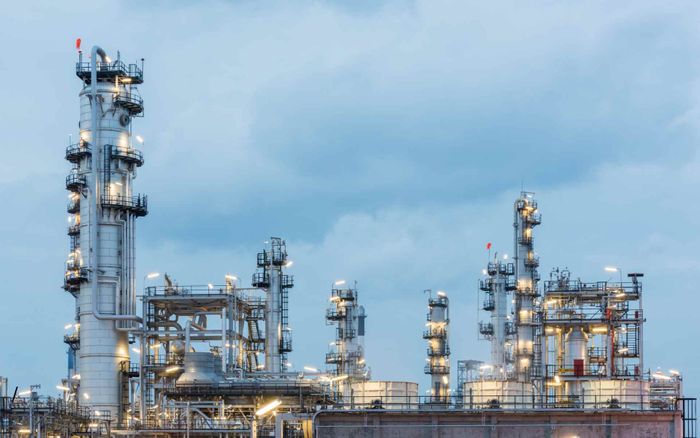
Angola has long-exported crude while importing much of the fuel it needs to support its economy. New refineries aim to reduce that dependence and create products for regional export.
The Cabinda refinery began operations in 2025 and was processing 15,750 barrels per day by (bpd) July 2026. Its first phase is designed for 30,000 bpd, with plans to expand capacity to 60,000 bpd.
The Lobito refinery is designed to process 200,000 bpd and produce gasoline, diesel and jet fuel. Construction is under way, with initial production slated for December 2027. The Ministry of Mineral Resources, Petroleum and Gas is also positioning the facility as a regional fuel hub, inviting countries such as Zambia, Namibia and Botswana to invest in the refinery.
Finding Regional Buyers
Angola's refined petroleum exports show room for regional growth. World Bank data puts the value of its 2025 exports at about $429 million. Togo was the largest destination, accounting for roughly $253 million, while Namibia bought about $41 million. The Democratic Republic of the Congo, Zambia and South Africa could offer further opportunities to serve mining, transport and industry.
Infrastructure expansion provides a strategic route to these markets as well as international destinations. The Lobito Corridor links Angola's Atlantic coast with mineral-rich areas of the DRC and Zambia. In August 2026, the African Development Bank approved a $255 million loan and a $10 million grant to support Zambia's participation, including planned rail and road improvements.
While the corridor is designed for minerals and other goods, it establishes a strong benchmark: cross-border infrastructure can not only bridge markets but support production distribution across Southern Africa. Angola's ability to turn its oil and gas resources into a wider range of products will depend on investment, infrastructure and partnerships with regional buyers.